How to Reactivate Old Leads and Past Buyers Without Starting From Scratch

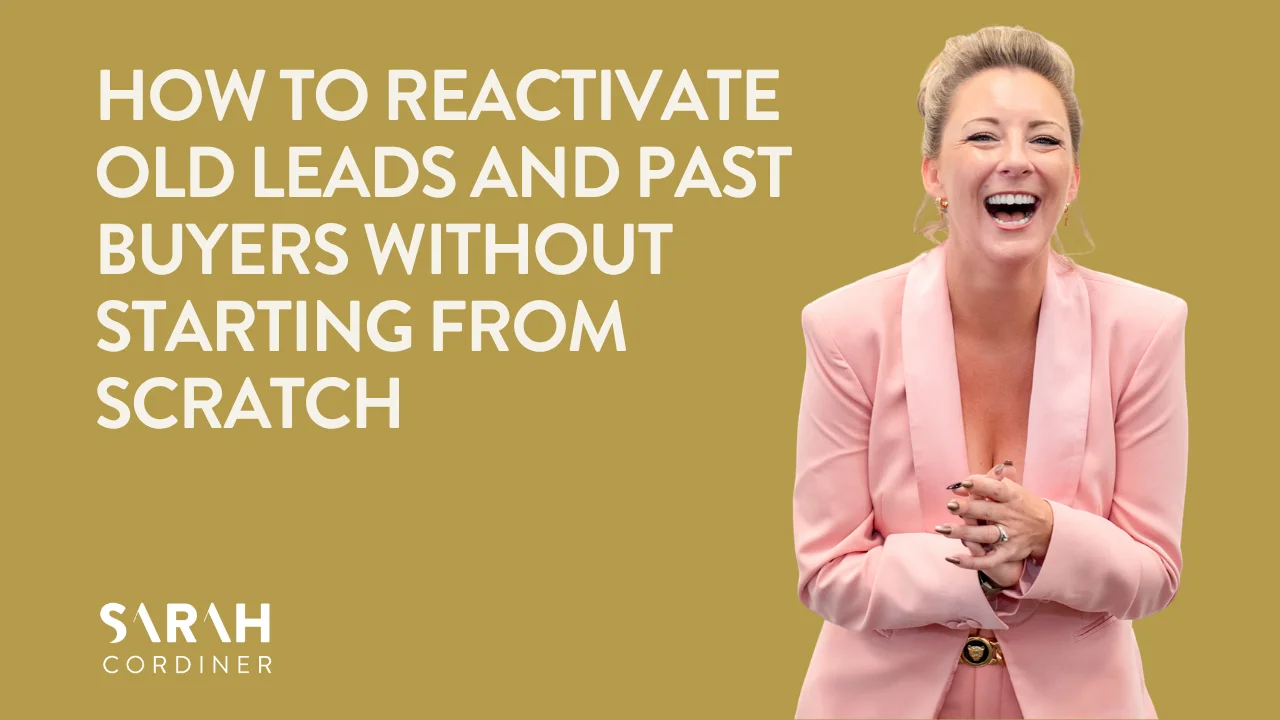
How to Reactivate Old Leads and Past Buyers Without Starting From Scratch
How to Reactivate Old Leads and Past Buyers Without Starting From Scratch

Introduction

Let’s be honest.

Most business owners are sitting on money they have already worked hard to attract.

It is sitting in old inboxes, forgotten CRM records, past buyer lists, cancelled memberships, previous enquiries, LinkedIn conversations, mobile phone contacts and people who once said, “I’m interested,” but never took the next step.

And yet, when business slows down, most people immediately think they need more new leads.

More followers.

More ads.

More cold traffic.

More visibility.

Now, of course, new lead generation matters. You absolutely need fresh people discovering your business. But if you only focus on cold audiences and neglect the people who already know you, have spoken to you, enquired about you, paid you, watched you or nearly bought from you, you are leaving a lot of opportunity untouched.

This is where a lead reactivation campaign becomes one of the smartest marketing activities you can do.

In this article, I’m going to walk you through how to reactivate old leads, warm up past buyers, clean your list, improve email deliverability, organise your customer journey, use CRM automation and refresh offers so that you are not constantly starting from scratch.

Because the truth is this:

It is usually much easier to resell to someone who already knows you than it is to convince a completely cold stranger to trust you for the first time.

Why Reactivating Old Leads Is One of the Fastest Ways to Generate Sales

When your pipeline slows down, it is very easy to panic.

You look at your calendar and think, “Where did all the bookings go?”

You look at your sales and think, “Why is nobody buying?”

You look at your audience and think, “Do I need to rebuild everything?”

But often, the issue is not that your business has no opportunities.

The issue is that your existing opportunities have gone quiet.

Old leads go cold when you stop communicating with them. Past buyers forget what else you offer. Enquiries move on because you never followed up. Previous clients may love you, but they are busy humans living busy lives, and they are not sitting around remembering to buy from you.

That is your job.

Marketing is not just about attracting new people. It has two jobs:

  1. Staying in touch with the people who already know you.
  2. Bringing new people into your world consistently.

Most businesses are stronger at one than the other.

Some business owners are great at nurturing their existing list, but they do very little cold marketing. Others are constantly chasing new leads, but they completely ignore past clients, old enquiries and previous buyers.

A healthy business needs both.

Where to Find Old Leads and Warm Contacts

Before you create a lead reactivation campaign, you need to know where your existing opportunities are hiding.

They may be in places like:

  • Your Gmail or Outlook inbox
  • Your CRM or email marketing platform
  • Your mobile phone contacts
  • Your LinkedIn connections
  • Your Facebook, Instagram, TikTok or YouTube followers
  • Old spreadsheet lists
  • Previous event attendees
  • Webinar registrations
  • Past buyers
  • Cancelled members
  • Former coaching clients
  • Speaking gig organisers
  • Corporate contacts
  • People who filled out forms but never booked
  • People who booked calls but never bought
  • People who bought a low-priced product but never moved to the next step

You do not need to overcomplicate this.

Start by asking:

Who already knows I exist?

Who has already shown interest?

Who has already paid me?

Who nearly bought but did not?

Who has worked with me before and may now be ready for the next step?

This is where many business owners discover that they do not have a lead problem. They have a follow-up problem.

Step One: Clean Your List Before You Send Anything

Before you start emailing old contacts, please do not just grab your entire database and blast everyone at once.

That is one of the fastest ways to damage your email deliverability.

If you have not emailed people for a long time, some of those addresses may no longer be active. People change jobs. Businesses close. Inboxes get abandoned. Some emails become invalid.

If you send to too many dead or invalid email addresses, your bounce rate can increase, and that can hurt your sending reputation.

What list cleaning means

List cleaning is the process of checking whether email addresses are still valid and safe to send to.

You can do this through tools such as:

  • Your CRM’s built-in email verification tool
  • NeverBounce
  • Warmify
  • Similar email verification platforms

If an email address bounces or is no longer valid, do not keep sending to it. In many CRMs, you can mark that contact as “do not disturb” so the record stays in your system, but they are no longer included in mass email campaigns.

This protects your domain and keeps your email marketing healthier over time.

Best practice for old lists

If you have not emailed a contact in months, treat them like a cold contact.

Even if they used to know you.

Even if they opted in years ago.

Even if they bought something once.

The longer the silence, the more carefully you need to reintroduce yourself.

Step Two: Organise Your Customer Journey

Before you reach out, you need to know who you are talking to.

A generic newsletter to everyone is not the same as a targeted reactivation campaign.

Your past buyers should not receive the same message as someone who only downloaded a freebie. A previous speaking client should not receive the same email as someone who bought a $49 course. A cancelled member should not receive the same message as someone who has never paid you before.

This is where your customer journey becomes incredibly useful.

Your customer journey is simply the path someone takes from first discovering you to becoming a buyer, repeat buyer and long-term client.

In your CRM, this may be shown as a pipeline. For example:

  • Lead
  • Enquired
  • Booked a call
  • Bought a low-priced offer
  • Bought a mid-priced offer
  • Bought a high-ticket offer
  • Booked a speaking gig
  • Joined membership
  • Cancelled membership
  • Past client
  • Do not contact

You do not need a complicated pipeline with 400 stages.

Keep it simple enough that you can quickly see where people sit in your business.

Why customer journey stages matter

When your contacts are organised properly, you can create much smarter campaigns.

For example:

  • Past speaking clients can receive an email about booking you again.
  • Past course buyers can receive an email about finally implementing what they learned.
  • Cancelled members can receive an email about what has changed since they left.
  • Old enquiries can receive an email inviting them to a free call or updated offer.
  • Low-ticket buyers can receive an email about the next logical step.

This is how you move from random marketing to intentional marketing.

Step Three: Segment Your Contacts

Segmentation simply means dividing your contacts into groups based on their relationship with your business.

This matters because specificity increases conversion.

A targeted message that says, “You booked me for a leadership event in the past and I wanted to see if you are planning this year’s speaker lineup,” will usually perform better than a generic newsletter saying, “Here is what I have been up to.”

Both can have a place in your marketing.

But they do different jobs.

Useful segments to create

Start with simple segments such as:

  • Past buyers
  • Past clients
  • Warm enquiries
  • Leads who never bought
  • Cancelled members
  • Event attendees
  • Webinar attendees
  • Corporate contacts
  • Speaking organisers
  • Low-ticket buyers
  • High-ticket buyers

Once these are organised, you can build a lead reactivation campaign for each group.

You do not need to do them all at once.

Start with the group closest to money.

Usually, that is your past buyers.

Step Four: Create a Lead Reactivation Campaign

A lead reactivation campaign is a simple sequence of messages designed to restart conversations with people who already know you.

It can be manual, automated or a blend of both.

Which option you choose depends on what you sell.

When to use automation

Automation works well when you are selling:

  • Low-priced digital products
  • Courses
  • Templates
  • Memberships
  • Workshops
  • Webinars
  • Simple offers with a clear checkout page

If the offer is $49, $97 or $149, you probably do not want to spend hours manually messaging every person one by one.

That is where an automated email sequence can save you a huge amount of time.

When to use manual outreach

Manual outreach works well when you are selling:

  • Speaking gigs
  • Consulting
  • Corporate workshops
  • High-ticket coaching
  • Done-for-you services
  • Partnership opportunities
  • Custom proposals

If one sale is worth thousands of dollars, it may be worth adding a personal touch.

That might look like a LinkedIn voice note, a personalised email, a short video message or a direct follow-up.

When to use both

In many businesses, the best approach is both.

Use automation to stay in touch consistently, then manually follow up with your highest-value contacts.

For example, you could send an automated reactivation email to 200 past contacts, then personally follow up with the 20 most valuable opportunities.

That way, you are using both leverage and human connection.

Step Five: Write Emails That Feel Human

Your reactivation emails should not sound like a corporate newsletter.

They should sound like a real person reaching out with a relevant reason.

Keep them short, conversational and specific.

The goal is not to write an essay.

The goal is to reopen a conversation or invite the next step.

Examples of reactivation email angles

For past speaking clients:

“Are you planning your speaker bookings for this year?”

For past coaching clients:

“Would you like help mapping out your next stage?”

For past course buyers:

“Did you ever get your course launched?”

For cancelled members:

“Would you like to see what has changed since you were last inside?”

For old enquiries:

“Is this still something you are working on?”

For past workshop attendees:

“Would you like the updated 2026 version of this training?”

Notice how each message relates to what they already did with you.

That is the difference between smart reactivation and random emailing.

Step Six: Use Follow-Up Properly

One email is rarely enough.

People are busy. They miss emails. They intend to reply and forget. They read your message while waiting in the school pickup line and then life happens.

This is why follow-up matters.

A simple reactivation workflow might look like this:

  1. Send the first outreach email.
  2. Wait 14 days.
  3. Check whether they bought, replied or booked.
  4. If yes, remove them from the campaign.
  5. If no, send a second email.
  6. Wait another 14 to 30 days.
  7. Follow up again with a different angle.

This does not mean harassing people.

It means staying visible long enough for the right person to act when the timing is right.

How often should you follow up?

For many businesses, a follow-up every 30 to 90 days works well.

In corporate and B2B markets, 90-day contact can be very useful because staff turnover is high, priorities shift and new budgets open up.

The person who ignored you three months ago may suddenly be the person with budget today.

Step Seven: Track Buyer Tags and Remove People Automatically

If you are using a CRM, make sure your buyer workflows apply clear tags.

For example:

  • Purchased course
  • Booked consultation
  • Joined membership
  • Booked speaking gig
  • Active client
  • Cancelled membership

This matters because your automation needs to know when someone has taken action.

If someone buys, books or replies, they should not keep receiving the same sales reminders.

A good workflow can automatically remove them from the reactivation campaign once they become a buyer or move to the next stage.

This keeps your communication cleaner and more professional.

Step Eight: Understand Email Deliverability

Email deliverability is one of those unsexy business topics that becomes very important when your emails stop landing in inboxes.

If your emails are not getting delivered, your marketing cannot work properly.

What to check in your email statistics

Most email platforms show statistics such as:

  • Delivered
  • Opened
  • Clicked
  • Replied
  • Bounced
  • Skipped
  • Unsubscribed
  • Complained

Your deliverability rate tells you whether your emails are reaching people.

If you are getting lots of bounces, you may need to clean your list.

If lots of emails are being skipped, certain inbox providers may be blocking mass emails before they even arrive.

If your open rates are low but deliverability is high, your subject line or audience relevance may need work.

Common email deliverability issues

Some common issues include:

  • Sending to old or invalid contacts
  • Using the wrong sending email address
  • Not having your domain records set up properly
  • Sending too many emails too suddenly
  • Having low reply engagement
  • Using overly promotional language
  • Not emailing consistently
  • Sending generic content to unengaged contacts

You may also need to check technical settings such as SMTP, DKIM and DMARC.

If that sentence made your eyes glaze over, you are normal.

This is exactly the kind of thing worth getting technical support for, because your sending domain is too important to guess your way through.

Step Nine: Ask for Replies to Improve Engagement

One of the simplest ways to improve email engagement is to ask people to reply.

Not click.

Not fill out a form.

Actually reply.

For example:

“What is your biggest question about this?”

“Would you like me to send you the free checklist?”

“Are you still working on this?”

“Do you want the updated version?”

When people reply, it signals engagement. It also starts real conversations, which is where sales often happen.

This is particularly useful if you are reactivating a list that has been quiet for a while.

Instead of sending a heavy sales email immediately, you might offer a useful free resource and say, “Reply yes and I’ll send it over.”

Simple. Human. Effective.

Step Ten: Refresh Offers Before You Relaunch Them

Sometimes the issue is not that your offer is bad.

Sometimes it just needs a polish.

Markets move faster now. What worked five years ago may need refreshing. What sold beautifully three years ago may need new positioning. What filled a room before may now need a sharper promise, better sales page or more relevant delivery format.

This does not mean you throw everything away.

It means you iterate.

Questions to ask before changing your offer

Before you rebuild anything, ask:

  • Have I actually marketed this enough?
  • Have enough people seen it?
  • Is the sales page clear?
  • Is the outcome still relevant?
  • Is the audience still the right audience?
  • Are people buying but not completing?
  • Are people interested but not converting?
  • Are past buyers asking for an updated version?
  • Could this become a sprint, challenge, workshop or live implementation day?

A lot of business owners blame the product too quickly.

Sometimes the real problem is simply that not enough people have seen it.

But if the offer has had enough visibility and still is not converting, then it may need a refresh.

How to Use AI to Revive Old Content and Offers

AI can be incredibly useful for reactivation and offer refreshes, but only if you give it proper context.

You can use AI tools like ChatGPT or Claude to help you:

  • Analyse past offers
  • Rewrite email campaigns
  • Create reactivation sequences
  • Refresh sales pages
  • Repurpose old blog posts
  • Turn popular topics into social content
  • Create new angles for past buyers
  • Identify frequently asked questions
  • Build campaign plans
  • Create 30-day promotional calendars

Start with what has already worked

If you have blog analytics, sales reports, Stripe data, PayPal data, Xero reports, CRM data or funnel statistics, use them.

Look for:

  • Your most viewed blog posts
  • Your highest converting offers
  • Your most purchased products
  • Your best-performing social posts
  • Your most booked services
  • Your highest revenue pages
  • Your most common customer questions

Then ask AI to help you refresh and repurpose those winners.

You do not need to reinvent everything.

Often, the smartest marketing move is to take what has already proven itself and make it current again.

What to Do If You Are Restarting After a Long Break

If your business has been quiet for a while, please do not shame yourself into thinking you have to rebuild everything from zero.

Start simple.

Your restart plan

  1. Make sure you have a simple website or landing page.
  2. Add a clear description of who you help and what you do.
  3. Add a calendar so people can book a call.
  4. Add at least one paid offer so people can pay you.
  5. Clean and organise your old contacts.
  6. Segment past buyers and old leads.
  7. Create a reactivation campaign.
  8. Refresh your strongest offer.
  9. Repurpose your best old content.
  10. Start publishing consistently again.

You do not need a 47-step funnel before you are allowed to sell.

You need a clear offer, a clear next step and consistent communication.

Common Mistakes to Avoid When Reactivating Old Leads

Mistake 1: Sending one generic email to everyone

Your past buyers, old enquiries and cold leads all need different messages.

Segment first.

Mistake 2: Forgetting to clean your list

Sending to invalid addresses can damage your email deliverability.

Clean before you send.

Mistake 3: Only sending one email

One message is not a campaign.

Follow-up is part of marketing.

Mistake 4: Making the email too long

People do not need your life story.

They need a relevant reason to respond or take the next step.

Mistake 5: Not having a clear offer

“Just checking in” is weak.

Give people something specific to do, book, buy, watch, read or reply to.

Mistake 6: Rebuilding the product before testing the marketing

Do not assume the offer is broken until you have put it in front of enough people.

Mistake 7: Ignoring past buyers

Past buyers are some of the most valuable people in your business.

They already trusted you once.

Best Practices for a Strong Lead Reactivation Campaign

Here is the simple version.

Clean your list.

Organise your contacts.

Segment your people.

Write specific emails.

Make a clear offer.

Follow up more than once.

Track who replies, buys or books.

Remove buyers from the campaign.

Refresh offers where needed.

Keep marketing consistently.

This is not glamorous work.

But it is profitable work.

And in a tougher market, the business owner who follows up, stays visible and keeps improving the offer is often the one who wins.

Key Takeaways

  • You probably have more opportunities in your existing contacts than you realise.
  • Marketing must include both new lead generation and existing contact reactivation.
  • Clean your list before emailing old contacts.
  • Segment your database so your messages feel relevant.
  • Past buyers should receive different emails from cold leads.
  • Automation is ideal for lower-priced offers.
  • Manual outreach is powerful for higher-value opportunities.
  • Email deliverability matters and should be monitored.
  • AI can help you refresh old content, offers and campaigns.
  • A quiet pipeline does not always mean your offer is bad. Sometimes you simply need better follow-up and more consistent marketing.

Actionable Next Steps

Here is what I would do this week:

  1. Export or review your existing contacts.
  2. Clean your email list.
  3. Identify your past buyers.
  4. Identify your warm leads who never bought.
  5. Choose one offer to promote.
  6. Write one reactivation email for past buyers.
  7. Write one reactivation email for old leads.
  8. Set up a simple follow-up sequence.
  9. Check your email deliverability after sending.
  10. Refresh one sales page or offer based on what your audience needs now.

Do not try to reactivate your entire business in one afternoon.

Start with one list.

One offer.

One campaign.

One clear next step.

That is how momentum comes back.

FAQ

What is a lead reactivation campaign?

A lead reactivation campaign is a sequence of emails, messages or follow-ups designed to reconnect with people who already know your business but have gone quiet. This may include old enquiries, past buyers, cancelled members, previous clients, webinar attendees or people who downloaded a lead magnet but never purchased.

How do I reactivate old leads without sounding pushy?

Keep the message short, relevant and helpful. Reference the reason you are contacting them, remind them how they know you and give them a clear next step. Avoid guilt, pressure or fake urgency. A simple question such as “Is this still something you are working on?” can restart the conversation naturally.

Should I email past buyers differently from cold leads?

Yes. Past buyers already know you and have trusted you enough to pay you. Your message can reference their previous purchase, experience or result. Cold leads need more context, trust-building and education before they are likely to buy.

How often should I follow up with old leads?

A good starting point is every 14 to 30 days during a specific campaign, then every 30 to 90 days for longer-term nurturing. The right timing depends on your offer, audience and buying cycle. Higher-ticket B2B and corporate contacts often benefit from regular 90-day follow-up.

Do newsletters replace reactivation campaigns?

No. Newsletters and reactivation campaigns do different jobs. A newsletter is usually broader and goes to a wider audience. A reactivation campaign is more targeted and speaks to a specific segment, such as past buyers, old enquiries or cancelled members.

What should I offer past buyers?

Offer the next logical step. This could be an updated version of what they bought, a live implementation workshop, a private consultation, a membership, a higher-level programme, a related course or a new service that helps them continue the journey.

What if my old leads are completely cold now?

Treat them like a cold audience. Reintroduce yourself, provide value and give them a simple way to engage. Do not assume they remember everything about you. Keep the tone warm, human and useful.

How can I improve email deliverability before reactivating my list?

Clean your list, remove invalid emails, check your sending domain, ensure your technical records are correctly configured and avoid sending a huge campaign to an old list all at once. Ask for replies and send consistently to build engagement over time.

Can AI help me create a reactivation campaign?

Yes. AI can help you write emails, segment campaign ideas, refresh sales pages, create follow-up sequences, repurpose old content and identify new angles for past buyers. The better the context you provide, the better the output will be.

What is the fastest way to restart sales after a quiet period?

Start with the people who already know you. Clean your list, contact past buyers, follow up with warm leads, refresh one strong offer and make it easy for people to book or buy. Then rebuild your public marketing rhythm through blogs, social posts, emails and direct outreach.

Conclusion

You do not always need to start from scratch.

Sometimes the fastest path to more sales is not a brand new funnel, a new offer, a new audience or a complete business reinvention.

Sometimes it is simply going back to the people who already know you and giving them a clear reason to reconnect.

Your past buyers, old leads, previous enquiries and quiet contacts are not dead weight. They are part of the business asset you have already built.

But they need communication.

They need context.

They need reminders.

They need relevant offers.

And in many cases, they need you to show up again with confidence and say, “Here is how I can help you now.”

So before you panic about needing more followers, more ads or more cold leads, go and look at the gold already sitting in your business.

Clean it.

Organise it.

Segment it.

Reactivate it.

Then keep going.

Call-to-Action

If you want help turning your expertise, offers, content and contacts into a proper business growth system, come and join me inside Legends Lab.

Inside Legends Lab, I help experts, coaches, consultants, speakers, course creators and business owners build stronger offers, smarter marketing systems, clearer customer journeys and practical strategies for becoming the trusted authority in their field.

You do not need to keep guessing what to sell, what to say or how to bring people back into your world.

Come and build it with us inside Legends Lab.

Build Your Brand & Business

Want Help Building Your Brand Properly?

If you want to learn how to build your personal brand, business systems, audience, and scalable online business properly, check out the Legends Lab program by Sarah Cordiner.

Join Legends Lab

How Sarah Cordiner Can Help You Scale Your Business with Tech, AI, and Automation

Tech doesn't have to be hard or scary. I help you make it easy to learn, fun to implement, and even better to see the amazing results that you can get with some simple tech tools and strategy.

Here are all of the different ways that I can help you scale your business, streamline your operations, and make your bottom line full of joy using tech, AI, and automation (as well as traditional methods) as your secret weapon.

starter kit gold
< class="bb_boot_card_title">FREE: Workshops & Resources

I have a number of freely available workshops and training that you can access on my free resources page.

Get The FREE Training
Book a Call

Book a Call with Me

If you have a number of questions, want one-on-one tech help or would just rather have a chat and guidance from me directly, you can book a call with me here.

BOOK NOW
the legends lab (1)
< class="bb_boot_card_title">The Legends Lab

Monthly live masterminds, monthly Q&A sessions, access to over 100 micro trainings, and a lively community of business owners growing their business with tech.

BECOME A LEGEND
EVENTS BY SARAH CORDINER
< class="bb_boot_card_title">In-Person Events & Bootcamps

I run regular boot camps and in-person tech get it done days where you can get results fast in these intensive hands-on experiences with Sarah Cordiner personally.

JOIN CONCEPT TO COURSE
Tekmatix-CMYK-portrait-tag
< class="bb_boot_card_title">Tekmatix Business Platform

Tekmatix is an AI-powered all-in-one business platform that includes your website, funnels, CRM, courses, memberships, social media scheduling, email marketing, AI agents, AI employees, calendar and appointment booking system, automations, and much more.

TEKMATIX

My FAVOURITE Business Software in the WORLD: Tekmatix all-in-one business platform..

TekMatix is the market-leading all-in-one business platform, CRM and course creation platform.

Business Owners, Course Creators, Coaches, Speakers & Service Providers: Looking for a platform to run your business??


Tekmatix is the solution you've been waiting for!

Tekmatix is an all-in-one business platform that combines all of the features of over 21 different software - in ONE place, for ONE price.

With Tekmatix, you get:

???? AI Employees, Bots and AI Voice Receptionists
???? Websites & Funnels
???? Courses and memberships
???? CRM & Client Records
???? Tap and Pay (EFTPOS) on your phone
???? Unified inbox - all your emails and DMs in one place
???? Calendar appointment booking
???? Social media scheduler
???? Kanban boards
???? Task manager
???? Automations & AI workflows
???? Project management
???? Communities
???? Email marketing
???? SMS & phone
???? Invoices and quotes
???? Contracts and signed docs
???? Affiliate program
???? Forms & quizzes
???? Blogging
???? Sales pipeline management
???? Ecommerce & physical goods
???? Mobile App
...and MUCH MORE!

You also get:

- FREE account set up
- 24/7 FREE customer support
- FREE daily live training calls
- The most awarded all-in-one business platform in based Australia - with customers in over 18 countries

....and the largest GHL-based platform in Australia... (and WAY MORE than 'just a whitelabel').....

We've built funnels, automations and websites specifically for course creators, coaches, speakers, membership site owners and service providers GLOBALLY.

All the hard work done for you.

We even have a FREE TRIAL available for you to check it out with no obligation;
....and our plans are available in AUD, USD and GBP!

GET A FREE DEMO CALL AND TRIAL HERE: Tekmatix.com 

Latest Articles by Sarah Cordiner